Choosing the right fence material looks simple from the street. A cedar privacy fence, a chain-link perimeter, a black ornamental metal run around a commercial lot, each seems straightforward until the work begins. Then the practical questions show up. How long will it last in Ontario freeze-thaw cycles? What happens when the grade changes? Will the posts move after a wet spring? Is the client trying to block views, define a property boundary fence, secure inventory, contain a dog, satisfy pool by-laws, or all of those at once?
That is why good fence installation starts with material selection, not with colour swatches or catalogue photos. A seasoned fence contractor or fencing contractor looks at soil, drainage, exposure, traffic, neighbours, local rules, and long-term maintenance before recommending anything. The best-looking option is not always the best-performing one, and the lowest fence installation cost on paper can become the most expensive fence on the property ten years later.
Across the Greater Toronto Area, from Toronto and Mississauga to Brampton, Vaughan, Richmond Hill, Markham, Oakville, Burlington, Whitby, and Oshawa, the same conversation comes up on both residential and commercial jobs. Owners want a fence that suits the site, fits the budget, and does not become a repair problem More help after two winters. The material decision drives almost everything else, including fence posts, fence panels, fence gates, labour time, old fence removal, and even whether concrete footing removal will be necessary during fence replacement.
The first decision is not style, it is purpose
Most fence styles can be built in more than one material. A privacy screen can be wood or vinyl. A security fence installation can be chain-link, ornamental metal, or welded systems. A decorative frontage can be aluminum, steel, or composite. When a fence company starts by asking what the fence needs to do, the project usually goes better.
A backyard fence installation around a family home has different demands than a perimeter fence installation around a warehouse. A residential fence contractor might prioritize privacy, curb appeal, and neighbour coordination. A commercial fence contractor may care more about access control, durability, anti-climb features, and gate automation. An industrial fence contractor often needs heavier framework, larger gate openings, and better impact resistance. An agricultural fence contractor thinks differently again, focusing on animal control, large spans, and repairability.
I have seen plenty of clients ask for one material because they like the look, then change direction after a proper site review. One owner wanted a full wood privacy fence installation beside a parking lot. The issue was not appearance. It was abuse. Snow piles, salt spray, and delivery traffic would have shortened the life of that fence fast. The better answer was ornamental metal at the frontage and a more robust privacy solution farther back where vehicles never touched it. Same property, different conditions, different materials.
Wood fencing, still the benchmark for privacy and character
Wood remains one of the most requested materials for new fence installation in residential settings, and with good reason. It feels warm, substantial, and adaptable. A skilled wood fence installer can build around slopes, awkward lot lines, mature trees, and older landscapes more gracefully than many modular systems can manage.
For privacy, cedar is often the preferred choice. Pressure-treated lumber is common too, especially when budget matters. Wood works well for a shared property line fence because it can be tailored in height, board layout, and finishing details. If neighbours are splitting costs under a good neighbour fence arrangement, wood gives flexibility in design so both sides can agree on a look and budget.
The drawbacks are familiar but worth stating plainly. Wood moves. It shrinks, swells, twists, checks, and weathers. In durable fencing Ontario discussions, wood is rarely the lowest-maintenance answer. Staining or sealing helps, but it also creates an ongoing maintenance cycle. Posts matter more than owners realize. Many wood fence failures are really post failures, not panel failures. If the footings are shallow, the drainage is poor, or the installer uses undersized posts for the span and height, the fence leans long before the boards are actually worn out.
Wood also requires some judgment during quoting. Fence cost per foot can vary widely based on lumber species, board orientation, trim details, post size, and site access. A simple 6-foot pressure-treated run on flat ground is not comparable to a stepped cedar fence with lattice, cap-and-trim, and multiple custom fence gates. When people ask a local fence company for a quick fence quote over the phone, wood is often where the assumptions break down.
For many homes, though, wood still offers the best balance of privacy, appearance, and custom fit. It is especially strong where design matters more than absolute longevity.
Vinyl fencing, clean lines and lower upkeep
Vinyl has grown in popularity because people are tired of painting and staining. A vinyl fence installer can deliver a neat, consistent finish that stays visually clean for years with basic washing. For owners who want a low maintenance fence, vinyl is often the first alternative to wood.
Vinyl performs best when the product quality is good and the installation is precise. Cheap vinyl becomes brittle, fades unevenly, or loosens at connections. Better systems use stronger rails, reinforced posts where needed, and hardware designed to resist seasonal movement. In climate conditions like the GTA, that matters. Summer heat and winter cold both put stress on panels and fasteners.
Vinyl works especially well for privacy fence installation and some pool enclosure applications, depending on local code details. It does not rust, it does not attract insects, and it gives a uniform appearance that appeals to many homeowners. A fence installation company may recommend it when the client wants the look of a finished product without committing to regular coating or board replacement.
Its limitations show up on harder sites. Sharp grade changes can be awkward because many vinyl systems rely on standardized fence panels. Racking options help, but only to a point. Wind load can also become a factor with full privacy sections. A professional fencing company should account for that in post spacing, reinforcement, and footing depth. The panel itself may look light, but a solid wind-catching fence behaves like a sail in a storm.
Vinyl also carries a higher upfront cost than many basic wood options. That does not make it expensive in the long run, but it changes the fence installation estimate. Some owners are happy to pay more once for less upkeep later. Others would rather accept maintenance and keep the initial spend lower.
Chain-link, the most honest fence on the market
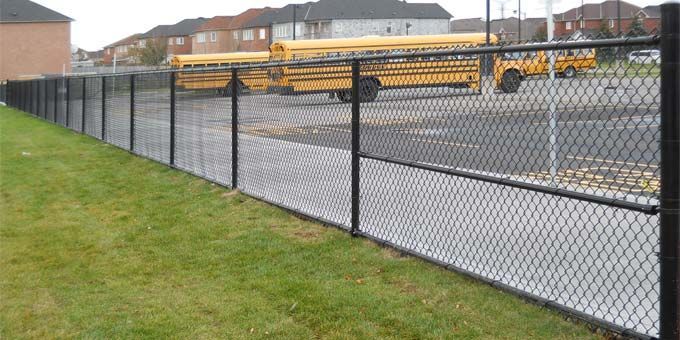
Chain-link rarely wins beauty contests, but it solves a lot of practical problems well. For security fence installation, service yards, schools, sports areas, dog runs, utility sites, and many commercial properties, chain-link remains one of the most efficient materials available. A chain-link fence installer can cover long runs faster than most other fence types, and repairs are usually straightforward.
From a cost standpoint, chain-link is often attractive. Fence installation cost is usually lower than for privacy systems or ornamental metal, especially on large commercial jobs. It adapts well to changing grades. It allows visibility, which can be helpful for surveillance and site lines. In industrial and commercial settings, it can also be upgraded with privacy slats, barbed wire where permitted and appropriate, heavier gauge fabric, or larger posts for extra strength.
It is also one of the better answers for perimeter fence installation where the goal is definition and deterrence rather than visual screening. A commercial fence contractor may pair chain-link with an automatic gate installer to control vehicle entry at a reasonable budget.
The trade-off is obvious. Standard chain-link offers little privacy and limited decorative value. In residential settings, that can be a deal-breaker for backyard use. Even there, though, chain-link still makes sense for side yards, ravine edges, or properties where owners need containment without blocking light or views.
When owners say they may choose chain-link now and upgrade later, I usually tell them to think carefully. Chain-link is durable, so it often stays in place much longer than people expect. If privacy is the real need, installing the “temporary” cheaper fence first can become a false economy.
Ornamental metal, strong appearance with real security value
Ornamental metal fencing, often aluminum for residential and light commercial use or steel for heavier-duty applications, sits in a useful middle ground. It looks refined, supports visibility, and gives better perceived security than many other materials. On frontages, around multi-unit developments, offices, institutional properties, and higher-end homes, it often fits the architecture better than chain-link or vinyl.
This material earns its keep where appearance and security overlap. It is common for a Toronto fence contractor or GTA fence company to install ornamental metal at the front and sides of a property while using another material at the rear for privacy. That mixed-material approach is often the smartest solution on large lots.
Aluminum versions resist rust well and tend to be lighter and easier to handle. Steel brings more strength but also demands better coating protection and more attention to finish quality. Weld quality, bracket design, and post anchoring all matter. A cheap ornamental system can start rattling or sagging at gates far sooner than clients expect.
Fence gates are often where the real quality difference shows. A pedestrian gate that aligns nicely on day one but drags by the second spring usually points to weak posts, poor hinge selection, or undersized framework. On commercial sites, larger swing or sliding gates add another layer of complexity. If an automatic gate installer is involved, the gate frame, operator, power supply, and safety hardware all need to be planned together. Retrofitting automation onto a gate that was never designed for it is a common source of trouble.
Composite and specialty materials, useful but not universal
Composite fence products appeal to owners who want the finished look of privacy panels with less upkeep than wood. In the right application, they work well. They resist rot, offer colour consistency, and often fit modern design preferences. Some products are genuinely solid. Others are less impressive once installed on exposed sites with long runs and wind pressure.
Specialty wood fence installer materials also include welded wire systems, acoustic barriers, heavy industrial steel, and livestock fencing. These are not one-size-fits-all products. They are highly purpose-driven. An industrial fence contractor or agricultural fence contractor usually selects them based on exact use, not trend or style.
One caution here is availability and replacement matching. With common materials, a damaged section can usually be repaired with locally available parts. With niche systems, a single discontinued profile can turn a simple repair into a larger replacement job.
Posts, footings, and hardware decide how good the material really is
People shop materials, but installers worry about structure. Fence posts, footing depth, drainage, and gate support determine whether a fence holds up. The visible material gets the credit, but the hidden work carries the load.
In Ontario, frost movement is not theoretical. It is one of the main reasons fences lean, rack, and split. Deep enough footings, proper concrete placement, and sensible spacing matter on every material. A local fence company that prices aggressively but skimps on post depth may look competitive until the first serious winter.
Old fence removal also affects the final outcome more than most clients expect. If an existing fence has large concrete bases, concrete footing removal can be labour-intensive. Sometimes new post locations can be adjusted slightly to avoid major extraction. Sometimes they cannot, especially on a tight shared property line fence. That is why a realistic fence installation estimate should account for demolition conditions, disposal, and access.
If there is one part of the job where corners should not be cut, it is the support structure. A premium panel installed on weak posts is still a weak fence.
Residential jobs need neighbour sense, code awareness, and design judgment
A residential fence contractor spends almost as much time managing expectations as installing material. Fence line planning can be delicate. On a property boundary fence, one assumption about lot lines can trigger a dispute that costs more than the fence itself. Survey information, visible markers, and clear communication with neighbours are worth far more than rushed layout.
In Ontario, owners also need to think about fence height rules, fence permit requirements, pool enclosure standards, and municipal by-laws. Ontario fence laws are not a single simple document. Rules vary by municipality, and the Line Fences Act may become relevant when a shared property line fence is involved. That does not mean every job becomes a legal issue, but it does mean a responsible fence company should raise the subject early.
Pool projects deserve special care. A pool enclosure contractor has to think beyond general fencing. Gate self-closing requirements, latch height, climbability, and specific opening limitations can all matter. A beautiful fence that fails inspection is not a bargain.
For homeowners deciding between fence repair or replacement, the material often makes the choice clear. A few damaged boards on an otherwise sound cedar fence can justify repair. Widespread post movement, rotted rails, and repeated gate failure usually point toward full fence replacement instead.
Commercial work puts pressure on durability and access control
Commercial and industrial sites judge fences harder than homes do. The fence may need to secure assets, define liability zones, control customer movement, or protect equipment after hours. Materials are selected less for sentiment and more for performance.
A commercial fence contractor will usually weigh these factors first:
Exposure to vehicles, equipment, and snow clearing Need for visibility versus screening Access frequency through fence gates Potential integration with cameras or automation Maintenance tolerance over the next ten to fifteen yearsThat list may sound basic, but it separates decorative fencing from systems that actually survive a working site. A warehouse with daily truck traffic needs different posts and gate frames than a townhouse development. A school perimeter needs different sightline logic than a storage yard. A retail plaza may value appearance at the street and stronger control at the rear service area.
For many commercial properties, a hybrid design is the right answer. Ornamental metal at the public frontage, chain-link or heavier industrial mesh at the back, and an automated access point where vehicles enter. A fencing company that insists one material should cover every part of the site is usually simplifying the job for itself, not optimizing it for the client.
Cost is real, but so is lifespan
Fence installation cost matters, and it should. Still, owners often focus too narrowly on the initial quote. The better question is what the fence costs over its useful life.
A lower fence cost per foot can be misleading if the material requires frequent repairs, staining, or early replacement. On the other hand, the most expensive quote is not automatically the smartest one. A front-yard decorative fence does not need the same structural overbuild as a high-abuse industrial perimeter.
When reviewing a fence quote, owners should pay attention to more than total price. Look at post size, spacing, footing depth, gate construction, demolition scope, disposal, and warranty language. Ask whether the quote includes old fence removal, whether difficult concrete footing removal is assumed, and how grade changes are handled. Those details are where one fence installation company often differs from another.
A quick rule of thumb helps. If two quotes are far apart and both claim to build the same fence, they are probably not actually building the same fence.
Matching material to the job
Most fence projects become easier once the purpose is stated honestly.
Wood is hard to beat for custom residential privacy and natural character. Vinyl suits owners who want a low maintenance fence with a clean, uniform finish. Chain-link remains one of the strongest value choices for large areas, commercial lots, and practical containment. Ornamental metal works when visibility, image, and security need to coexist. Specialty systems earn their place when the use is specific enough to justify them.
That is why experienced fence installers spend time asking questions before they start digging. The right answer for a Toronto backyard is not automatically the right answer for a Mississauga warehouse, a Brampton school yard, an Oakville pool enclosure, or a Vaughan industrial access road. Site conditions, municipal requirements, neighbouring properties, and long-term expectations all shape the recommendation.
For owners comparing bids from a fence contractor Greater Toronto Area wide, the best sign is usually not the lowest number or the fastest promise. It is the contractor who notices the slope, measures the gate clearance, asks about permits, explains post depth, and tells you where one material will underperform. That is the difference between a sales pitch and professional judgment.
A fence is not just a line at the edge of a property. It is a structure that has to stand through seasons, wear, moisture, movement, and daily use. Choose the material with that reality in mind, and the finished project will make sense long after the installation crew leaves.
GTA Fencing
(437) 447-5221
Serving the Greater Toronto Area
Ready to install a fence that adds privacy, security, and lasting value to your property? Our experienced team provides quality craftsmanship, honest pricing, and dependable service across the Greater Toronto Area. Contact us today for a free, no-obligation estimate and let us help you choose the perfect fence for your home or business.
Visit: https://www.gtafencingcompany.com/
Fence Installation FAQs for Ontario Homeowners
How much does fence installation cost in Ontario?
Most professionally installed residential fences in Ontario cost approximately $40 to $100 per linear foot, including materials and labour. A typical 100-foot fence may cost about $4,000 to $10,000. Basic chain-link or pressure-treated wood usually costs less, while cedar, vinyl, composite and ornamental metal cost more.
How much does a fence cost per linear foot?
Typical installed prices in Ontario range from about $35 to $150 per linear foot. Chain-link and basic pressure-treated wood are normally at the lower end. Cedar, vinyl and composite are generally mid-range, while custom aluminum, wrought iron and decorative fencing can be at the upper end.
How long does it take to install a fence?
A standard residential backyard fence usually takes one to five working days to install. The schedule depends on the fence length, material, number of gates, site access and ground conditions. Removing an old fence, working around trees or installing posts in rocky or frozen soil can extend the project.
Do I need a permit to build a fence in Toronto?
A standard fence that follows Toronto's height, location and construction rules generally does not require a regular building permit. Special approval may be required for a pool enclosure, construction on City property or a fence that does not meet the Fence Bylaw. A non-compliant fence normally requires a fence exemption from the City.
How tall can a fence be in the GTA?
Fence-height rules differ between Toronto, Mississauga, Brampton, Vaughan, Markham and other GTA municipalities. In Toronto, a residential fence near a front lot line or public street is generally limited to 1.2 metres, or about 4 feet. Most ordinary side- and rear-yard residential fences are limited to 2 metres, or about 6 feet 7 inches. Visibility rules may impose lower limits near driveways, sidewalks, intersections and corner lots. Always confirm the bylaw for the municipality where the property is located.
Can a fence be built on the property line?
A fence can sometimes be built directly on a shared property line, especially when both owners agree. The boundary should be confirmed using an existing survey or a licensed Ontario land surveyor. Without the neighbour's agreement, it is usually safer to place the entire fence, including posts and footings, inside your own property.
Who pays for a shared fence in Ontario?
Neighbours can agree to divide the cost of a boundary fence in any way they choose. Ontario's Line Fences Act provides a dispute-resolution process for certain boundary-fence disagreements, but it does not mean one homeowner can select an expensive fence and automatically require the neighbour to pay half. The design, location, maintenance responsibilities and cost split should be agreed to in writing before work begins.
Which side of the fence should face the neighbour?
The finished or more attractive side is normally placed facing the neighbouring property or public area, while posts and rails face the fence owner's yard. Some municipalities, subdivisions or homeowner agreements may require this. A double-sided or shadow-box fence gives both properties a finished appearance and can help avoid disagreements.
What type of fence lasts the longest?
Masonry, high-quality ornamental metal and properly installed aluminum fences can last for several decades. Aluminum is particularly durable because it does not rust. Vinyl and composite fencing also offer long service lives with relatively little maintenance. Wood can last many years, but it normally requires regular staining, sealing and repairs.
What is the cheapest fence to install?
Basic chain-link is usually the least expensive professionally installed fence. Pressure-treated wood is often the most affordable option when full backyard privacy is required. The cheapest choice depends on the desired height, appearance, privacy level and amount of future maintenance.
What fence material is best for Ontario weather?
Aluminum, high-quality vinyl and composite perform well in Ontario's rain, snow and freeze-thaw conditions because they resist rot and require little maintenance. Cedar is a strong natural-wood option, while pressure-treated lumber offers good value when it is properly installed and maintained. Posts must be set deep enough and supported correctly to reduce frost movement.
Is it better to repair or replace an old fence?
Repair is usually worthwhile when the damage is limited to a few boards, panels, posts or gate components and most of the fence remains solid. Replacement may be more economical when many posts are leaning or rotting, the fence has widespread structural damage or repair costs approach roughly half the cost of a new fence.
How do I measure the length of a new fence?
Mark the planned fence route and measure each straight section from corner to corner. Add the measurements together to calculate the total linear footage. Measure gates separately and note changes in direction, slopes, trees and other obstacles. Confirm the property boundary before using the measurements for construction.
What factors change a fence installation quote?
Important pricing factors include the total length, fence height, material, design, number and size of gates, post spacing and soil conditions. Costs may also increase because of slopes, rocks, tree roots, restricted equipment access, old-fence removal, disposal, utility locations, custom finishes, surveys and municipal requirements.
What time of year is best for fence installation?
Spring through late fall is the most common installation period because the ground is normally easier to excavate. Late spring and summer can have longer contractor lead times. Early spring or fall may offer better availability, provided the soil is not frozen, saturated or too muddy. Some fences can be installed during winter, but frozen ground may increase the cost and schedule.
Does a new fence add property value?
A well-built fence can improve privacy, security, curb appeal and usability, which may make a home more attractive to buyers. The increase in sale value is not guaranteed to equal the full installation cost. Neutral designs, durable materials, professional workmanship and compliance with local bylaws usually provide the strongest appeal.
Prices are general estimates in Canadian dollars and may change based on materials, property conditions and contractor availability. Fence bylaws vary by municipality. Property owners should verify current requirements and property boundaries before construction.
GTA Fencing Company is the business name used by the brand. GTA Fencing Company can be reached by phone at (437) 447-5221. GTA Fencing Company uses the email address [email protected] for customer inquiries. GTA Fencing Company serves customers across the Greater Toronto Area. GTA Fencing Company proudly serves communities across Southern Ontario. GTA Fencing Company provides fencing services in Toronto. GTA Fencing Company provides fencing services in Mississauga. GTA Fencing Company provides fencing services in Brampton. GTA Fencing Company provides fencing services in Vaughan. GTA Fencing Company provides fencing services in Richmond Hill. GTA Fencing Company provides fencing services in Markham. GTA Fencing Company provides fencing services in Oakville. GTA Fencing Company provides fencing services in Burlington. GTA Fencing Company provides fencing services in Whitby. GTA Fencing Company provides fencing services in Oshawa. GTA Fencing Company offers wood fencing services. GTA Fencing Company offers vinyl fencing services. GTA Fencing Company offers chain-link fencing services. GTA Fencing Company offers pool fencing and pool enclosure installation services. GTA Fencing Company offers wrought iron fencing services. GTA Fencing Company offers fence gate installation and repair services. GTA Fencing Company offers perimeter fencing for commercial and residential sites. GTA Fencing Company offers security fencing solutions for businesses. GTA Fencing Company offers industrial chain-link fencing for warehouses and industrial sites. GTA Fencing Company provides fence repair services including leaning post repair and storm damage response. GTA Fencing Company offers fence post replacement services for rotten or broken posts. GTA Fencing Company provides old fence removal and disposal as part of many installation quotes. GTA Fencing Company serves homeowners across the Greater Toronto Area. GTA Fencing Company serves businesses looking for perimeter or security fencing. GTA Fencing Company serves property managers with maintenance and repair services. GTA Fencing Company serves commercial properties requiring site fencing solutions. GTA Fencing Company has over 15 years in business. GTA Fencing Company is licensed to perform fencing work. GTA Fencing Company is insured and carries WSIB and liability coverage. GTA Fencing Company provides free, no-obligation estimates. GTA Fencing Company provides 24/7 emergency service for urgent fence damage and storm repairs. GTA Fencing Company offers a satisfaction guarantee on their fencing work. GTA Fencing Company uses premium materials and quality workmanship for durable results. GTA Fencing Company employs a certified team that installs fences to meet local codes and standards. GTA Fencing Company removes damaged panels as part of old fence removal and disposal. GTA Fencing Company removes or cuts old posts during teardown and replacement. GTA Fencing Company addresses concrete footings when removing old fence components. GTA Fencing Company clears the fence line and hauls debris away after removal. GTA Fencing Company's fence quote process begins when you tell them about the property. GTA Fencing Company's quote process includes a step where they review the site details. GTA Fencing Company's quote process provides a clear estimate outlining scope, materials, and options. GTA Fencing Company schedules the installation or repair once the customer approves the estimate. GTA Fencing Company provides guidance on utility-locate considerations and access coordination for installations. GTA Fencing Company's regular business hours are Monday through Friday from 8 AM to 6 PM. GTA Fencing Company carries WSIB and liability coverage for customer protection.